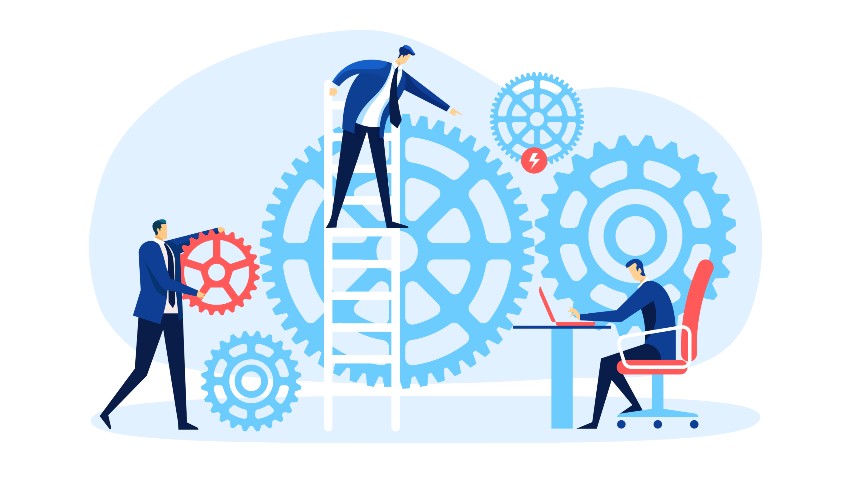
Legacy architecture hinders growth, weakens resilience, and slows down operations.

Outdated systems resist change. Releases take longer. Integrations demand continuous workarounds. Scaling attempts reveal hidden failures. Cloud costs increase, but the promised agility and performance are not delivered.

Without cloud application modernization, infrastructure becomes a burden. It becomes rigid, risky, and expensive. Technical debt accumulates. Vulnerabilities multiply. Critical updates fall behind. Teams shift to problem management instead of innovation.

Cloud modernization restores speed, increases efficiency, strengthens security, and aligns your technology stack with business strategy. At Güvenlikod, we map existing architectures, identify bottlenecks, redefine system boundaries, and rebuild cloud foundations for resilience, scalability, and measurable impact.

Tomorrow’s leaders are modernizing today.

Modernizing Complex Systems?

From day one, we establish development environments that provide enterprise scalability, compliance-driven security, and built-in control.

Our Cloud Modernization Services

Legacy systems harbor hidden complexities and rigid dependencies. Effective cloud modernization is not just about superficial fixes. It requires re-architecting a system that operates under real operational pressure.

We redesign cloud architectures for sustainable speed, resilience, and cost-effectiveness:

  • Domain-driven service decomposition
    Defines clear boundaries based on business logic and operations, enabling independent scaling and deployments.

  • Elastic scalability
    We establish horizontal scaling, automatic triggers, regional fault tolerance, and mechanisms that optimize resource consumption.

  • Embedded observability
    Structured logging, distributed tracing, real-time telemetry, and alerts enable rapid incident detection and root cause analysis.

  • Security and governance by design
    Access control, encryption standards, compliance frameworks, and zero-trust principles are embedded from the start, from infrastructure to APIs and data flows.

  • Ready CI/CD enablement
    Architectures suitable for high-frequency deployments are seamlessly integrated with automated pipelines, canary, and phased release strategies.

With deep architectural redesign, you get cloud-native systems that adapt to changing business requirements and operate with measurable accuracy under production load.

We transform monolithic or outdated systems, including critical applications in industrial and control-heavy environments, into modular and easy-to-maintain architectures:

  • Codebase decomposition and domain isolation
    We break down monoliths into components using domain-driven design principles, reducing dependencies and deployment risk.

  • Performance and resource efficiency
    Algorithms, queries, caching, and memory management are redesigned according to latency, throughput, and cost/performance targets.

  • Framework and library modernization
    Legacy frameworks are updated or replaced with secure, actively maintained, and cloud-optimized technologies.

  • Resilience and fault handling
    We minimize customer impact with circuit breakers, retries, and fallback mechanisms.

  • Continuous testing and deployment readiness
    Test coverage, automation hooks, and release orchestration confidently support rapid iterations.

Refactoring is a fundamental step towards cloud-native applications. It enables faster deployments, cost-effective scaling, and higher technical resilience under real-world conditions.

Containerization transforms applications into portable and consistent execution units. Kubernetes provides policy-based control to meet modern non-functional requirements. We build production-grade container ecosystems:

  • Microservice containerization and dependency isolation
    Minimal images, strict resource limits, and independent operating environments increase scalability and security.

  • Dynamic scaling and load management
    The number of replicas is adjusted according to actual demand, and SLA thresholds for latency and availability are maintained.

  • Self-healing and automatic recovery
    Health checks, automatic rescheduling, and rollbacks reduce MTTR.

  • Security, compliance, and policy enforcement
    RBAC, network policies, runtime security scans, and audit logs meet ISO 27001, SOC 2, and GDPR requirements. Compliance with KVKK for Turkey is also considered.

  • Continuous deployment and GitOps integration
    Infrastructure as code, declarative manifests, and automation pipelines enable repeatable, traceable releases.

Monolithic architectures resist scalable deployments. Effective decomposition produces architectures that meet non-functional requirements such as flexibility and speed:

  • Domain-driven decomposition
    Services are separated according to core business functions. Ownership and responsibility boundaries become clearer.

  • Boundaries based on latency and availability
    Interfaces are designed to minimize synchronous dependencies, optimizing distributed latency and regional resilience.

  • Resilience and fault isolation
    Circuit breakers, retries, fallbacks, and isolation are built-in.

  • Observability and dependency mapping
    Distributed tracing, metric collectors, and visualization of fault paths enable rapid diagnosis.

  • Secure, scalable API contracts
    Versioning, documentation, authentication, and rate limiting ensure secure interoperability.

APIs are the connective tissue of modern architectures. If not modernized, they become performance bottlenecks and security risks. Our approach redesigns APIs for speed, resilience, and security:

  • Contract-driven API design and governance
    Clear versioning, comprehensive boundaries, and backward compatibility ensure loose coupling.

  • Latency-sensitive communication models
    Protocols and payloads are optimized for distributed and real-time systems.

  • Identity, security, and enforcement
    Authentication, authorization, encryption, and rate limits are applied at API gateways and service meshes.

  • Observability and fault diagnosis
    Distributed traceability, correlation IDs, and error budgets provide visibility into behavior under load.

  • Seamless integration
    We modernize legacy interfaces, and upgrade cloud-to-cloud integrations and third-party connections.

Outdated databases undermine scalability and availability. Modernization establishes data architectures that meet consistency, resilience, and real-time requirements:

  • Scale and sharding strategy
    Horizontal partitioning, replication, and multi-region deployment ensure growth without compromising performance.

  • Consistency and availability balance
    Storage layers are adjusted according to business-specific NFRs, and CAP principles are practically applied.

  • Migration to cloud-native and distributed databases
    Platforms like Aurora, Cosmos DB, DynamoDB, CockroachDB improve operational scale and disaster recovery.

  • Data governance and compliance
    Encryption at rest and in transit, retention policies, and audit frameworks are designed to comply with ISO 27001, GDPR, and KVKK requirements.

  • Observability and performance
    Telemetry, query monitoring, index optimization, and anomaly detection preserve user-centric performance.

Resilient cloud systems are built with comprehensive observability, proactive fault modeling, and structured recovery patterns:

  • Telemetry-centric design
    Every service is equipped with real-time metrics, distributed tracing, and structured logs.

  • Failure mode engineering and chaos resilience
    Failure domains are modeled, and controlled fault injection tests the system’s behavior under stress.

  • Automated recovery strategies
    Automatic restarts, active-active failover, retries, and rate limiting reduce MTTR.

  • SLOs and error budgets
    Measurable resilience targets and operational priorities are defined for critical services.

  • Real-time operational insights
    Dashboards, alerting pipelines, and escalation flows make incident response fast and actionable.

In modern cloud systems, privacy, integrity, and compliance are built-in functions:

  • Zero-trust architecture
    Identity-based access, strong authentication, policy enforcement, and encrypted communication are embedded across all layers of the infrastructure.

  • Data protection
    Encryption at rest and in transit, tokenization, key management, and granular access policies are implemented.

  • Continuous threat monitoring
    Cloud-native security monitoring, vulnerability scans, and behavioral analytics provide proactive detection and response.

  • Compliance with regulatory frameworks
    Validation is performed according to standards such as ISO 27001, SOC 2, GDPR, HIPAA, PCI DSS, and KVKK in Turkey.

  • Operational resilience and incident response
    Automated logging, real-time alerts, and recovery protocols reduce risks and accelerate reporting.

The cloud must not only scale but scale with sustainable cost structures. We integrate the FinOps discipline into every modernization project:

  • Cost-performance alignment
    We optimize resource allocation to support your latency, availability, and resilience goals.

  • Dynamic resource management and right-sizing
    Workloads are monitored, automatically scaled, and adjusted according to actual usage patterns.

  • Provider and service selection optimization
    We build architectures that leverage multi-region pricing advantages and usage-based scaling patterns.

  • Financial observability and forecasting
    Real-time spending dashboards, anomaly alerts, and usage forecasts provide continuous visibility to technical and business teams.

  • Governance and policy automation
    Budget policies, quota limits, and automated tagging ensure cost discipline.

FinOps is not an afterthought but a fundamental architectural task that ensures cloud systems remain efficient, sustainable, and strategically scalable.

Need a Developer?

Plan your future product with Güvenlikod. We combine your business goals with clean code, robust architecture, and a security-first approach. With intuitive UI/UX and adaptable modules tailored to your needs, we aim to create solutions that meet your organization’s or your customers’ expectations.

Benefits

Frequently Asked Questions

Modernizing a running system is like changing the engine while the company is in motion. Before the first step, every dependency, boundary, and weak point must be understood. We establish a baseline for the entire system. We map the current state, test performance under real stress, and define thresholds that maintain stability.

Changes are implemented gradually. Continuous health checks are performed, and a constant safety net is in place. Critical services are protected with redundancy and rapid rollback paths. Operations continue without interruption. Real-time monitoring guides the process throughout. The necessary visibility is provided for your team to make confident decisions as they progress.

Strategic modernization focuses on impact at every step. We prioritize systems that have the greatest impact on delivery speed, total cost of ownership, customer experience, and scaling limits. By modernizing the highest-leverage components first, we achieve early results and minimize disruption. Each step builds the foundation for the next. A steady momentum towards agility, resilience, and growth is established without overloading operations.

Speed, resilience, and scale reinforce each other when brought together on the right foundation. Our solution is built upon clear service boundaries, layered abstractions, and scalable pipelines. Thanks to observability, automated recovery, and domain-driven design, components remain interconnected yet independent. With the right foundation, systems accelerate under load, scale naturally with demand, and are ready for the next step.

Lasting momentum is created when the core systems that a company relies on for growth and adaptation are strengthened. We redesign architectures, streamline operations, and reduce technical debt with the goal of long-term stability and flexibility. A future-proof foundation is established with modular scalability, secure failover, continuous delivery, transparent cost management, and security implemented at every layer. This foundation accelerates innovation, brings delivery forward, and enables you to confidently seize new opportunities.

Every step is managed with visibility. Risks, progress, and potential trade-offs are identified, monitored, and reported without delay. Architectural decisions, transition phases, and optimization efforts are linked to clear technical and business objectives. This is supported by live telemetry and real-time performance data.

We continuously track system health, error budgets, deployment speed, and financial dynamics. Stakeholders gain a clear view of the current state and future resilience. Conflicting objectives are identified early, modeled, and managed through joint prioritization. Thus, modernization transforms from a reactive process into a strategic advantage.

We Repair, Transform, and Rapidly Scale Your Software.

Let us know where your system needs assistance; we will show you how to move forward with clarity and speed. We are your engineering partner from architecture to launch.

Book your free consultation. We will help you move faster and smarter.

Looking to Achieve Your Goals? Schedule a Consultation Now!